

Defining strategy and design direction for $289M enterprise software transformation
Background & Business Context
A Fortune 500 insurance company with more than 30,000 employees was looking to overhaul its entire enterprise software system. This system had been updated incrementally over 30 years, with new functionality added as business needs changed. Over time, the platform became increasingly complex, with new capabilities layered onto an aging architecture rather than being redesigned as a cohesive whole.
The company committed to invest an estimated $289 million over six years to transform the platform. When I joined, more than 40 senior leaders from across the organization had been meeting regularly for eight months. However, discussions had become cyclical, and the group was struggling to commit to a strategy or direction.
How I Approached the Problem
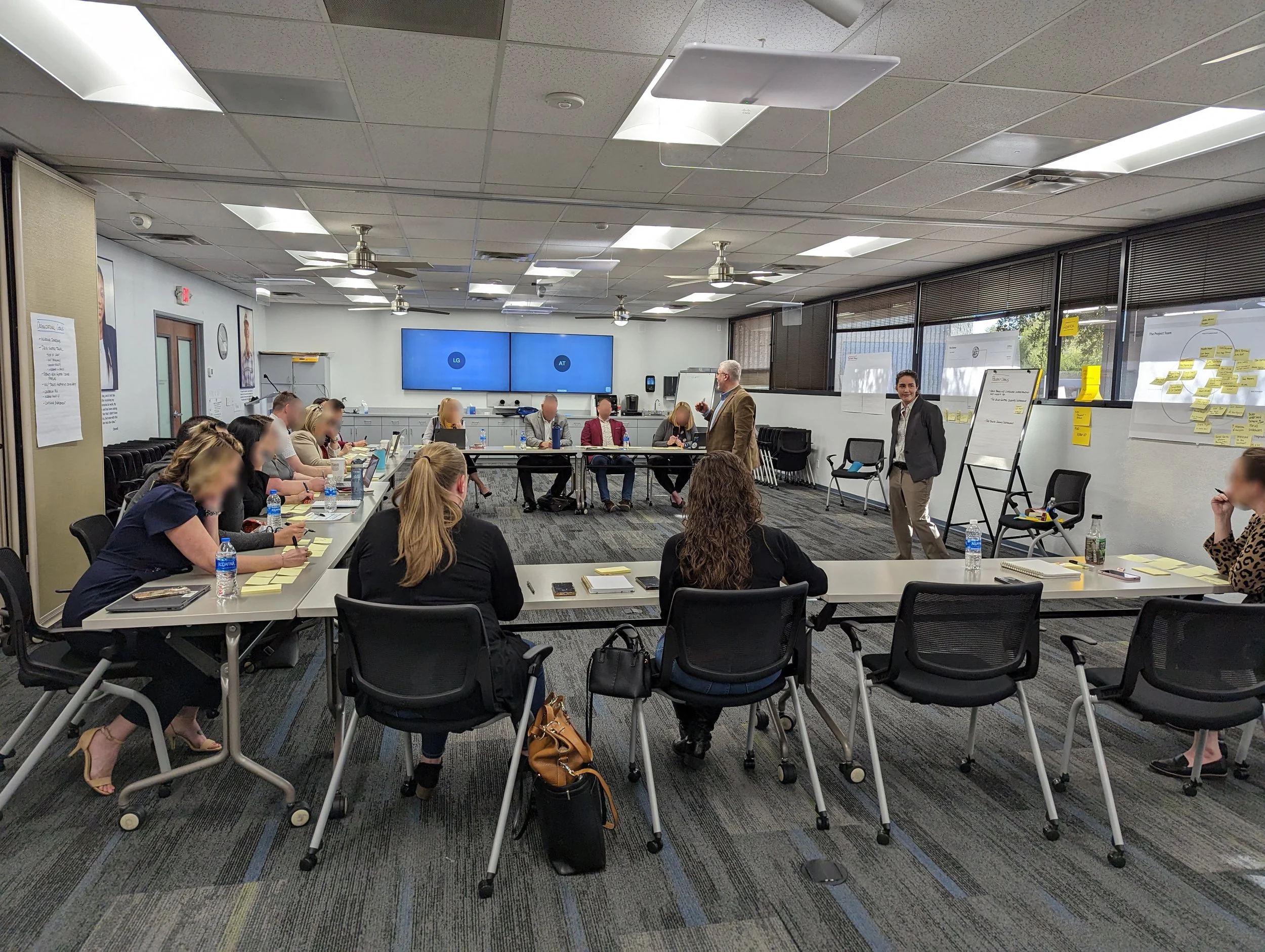
I built relationships with senior leaders dedicated to this initiative; through 1:1 meetings and attending group discussions, I developed a deep understanding of the problem space, each leader’s perspective on how the initiative should move forward, and the business metrics driving their decisions.
I identified significant gaps in the organization’s understanding of current employee practices and software usage. Based on these insights, I proposed an ethnographic research effort intentionally designed to span across lines of business (LOB), employee roles, and levels of seniority. This sampling approach allowed us to investigate high-priority areas while building a comprehensive view of the end-to end claim experience.
My Role
I was the sole researcher supporting this initiative for the discovery phase. In this role, I coached business partners to participate in observational research, developed the research strategy and approach, and synthesized all research findings.
As the initiative transitioned from discovery to design, the UX team expanded from 3 to 14 members, and I was appointed Research Strategist for the initiative. In this role, I defined research strategy and project plans for the Experience Design team, delegated work across research and design, and continued to lead high-impact research projects.
Guiding Principles
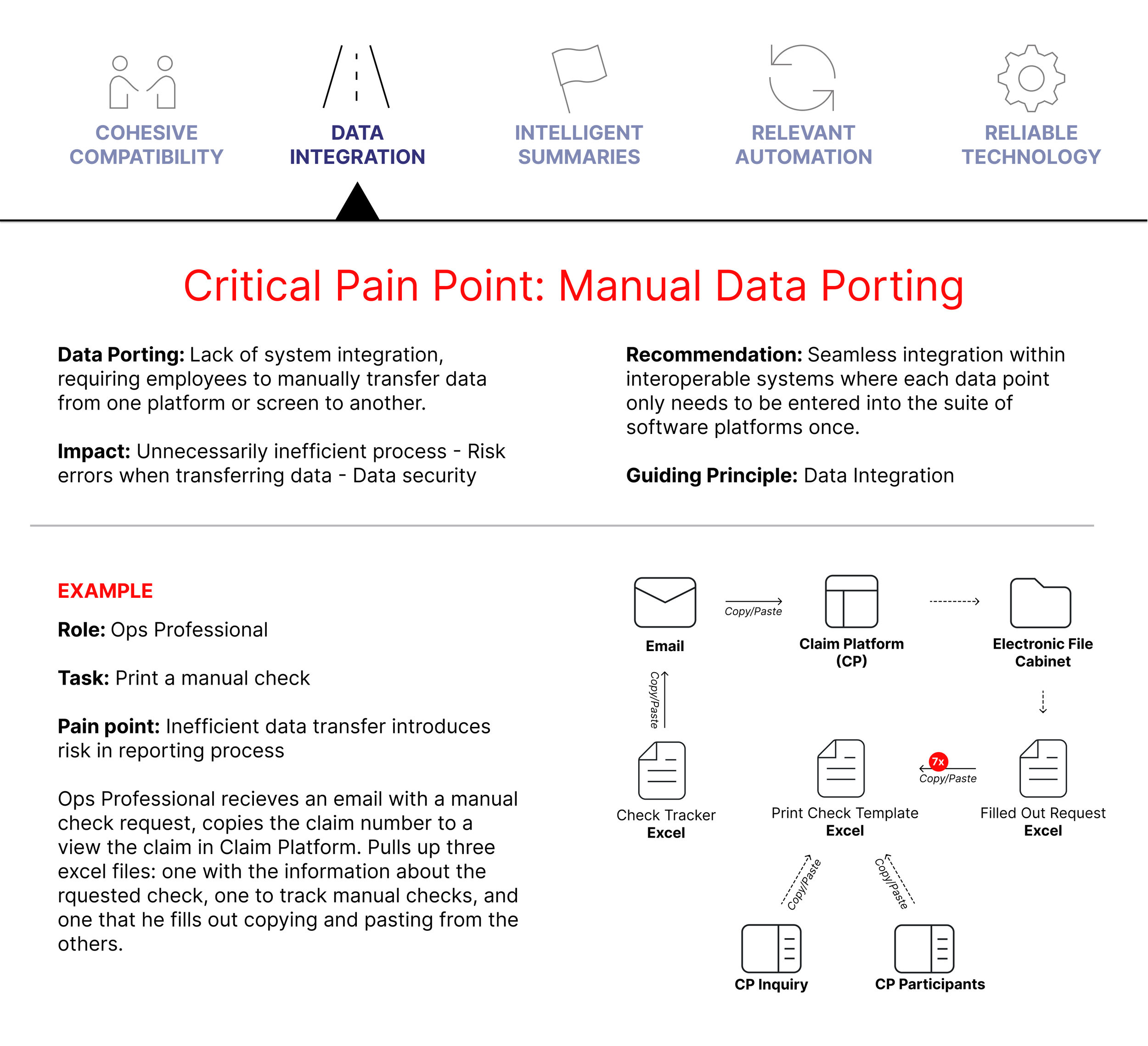
Based on insights from ethnographic research, I developed five guiding principles, each paired with illustrative pain points. These principles gave the team a shared vision and design direction, helping leadership align on priorities and move the initiative forward.
For example, I highlighted the burden of employees’ routine need to copy and paste data between tabs— a manual process that created inefficiencies, increased risk of data errors, and raised security concerns. Framing this pain point in terms of impact helped leadership align around a shared goal of seamless data integration.
Together, these five guiding principles provided a focused framework for prioritizing efforts and allocating resources, while giving the Experience Design team clear context to inform early concepts and wireframes.
Project Management & Strategy
After I outlined Guiding Principles, the project rapidly scaled, expanding to include 11 additional Experience Design team members over six weeks. For that transition, my role shifted to Research Strategist; I partnered with the Design Lead to define the design vision and approach, and, to streamline participant recruitment, I created an internal employee research panel that provided a reusable pool of participants, reducing recruitment effort by eliminating the need to recruit from scratch for each study and speeding up the turnaround for each iteration.
I leveraged my understanding of employees’ current workflows and jobs to be done to create a backlog of research questions and areas of explorations. I organized the work by core functionality, defining distinct experience areas that could be designed and tested independently. This structure allowed the expanded team to work in parallel while keeping each area focused enough to move quickly through design and testing.
Using my understanding of project priorities, dependencies, and timelines, I developed a project plan to facilitate alignment discussions with leaders across Product, Behavioral Science, Customer Experience, and the broader initiative team. These conversations helped identify priorities, resolve conflicts, and account for cross-functional constraint
To ensure the plan could adapt as the initiative evolved, I built in decision points and scheduled biweekly stakeholder reviews to reassess priorities. This flexible planning approach gave leadership the confidence to move forward while allowing the team to incorporate new information without disrupting work already in progress.