
Energizing a group of professional membership associations to solve shared challenges together.

Challenge
Our small research and design consultancy was looking for a way to mitigate the ebbs and flows of solely acquiring business through one-off clients projects. In addition to working with one client at a time for each project, we envisioned a subscription based business model where several clients purchase our services as a group on an annual basis. They would come together and receive design and research services throughout the year that would benefit all clients within the cohort.
The first challenge in exploring this cohort business model was identifying industries with non-competing entities facing similar problems. To pilot this program, we targeted professional membership organizations, realizing that young professionals are joining professional associations less often and engaging less deeply across many fields and industries.
The goal of the initiative outlined below was to create a case study for associations who were considering joining the cohort, giving them a sense of the type of recommendations they could expect to get out of their membership, providing compelling insights that would be relevant and valuable, and energize them to convene and solve problems together. We aimed to identify what activities and behaviors young professionals were currently willing to spend their time engaging with, uncover unmet needs of young professionals related to their work and industries, and identify offerings and value propositions that deliver on these needs.
Team & My Role
The work outlined below describes an effort I led solo, built off of insights I pulled from other researchers and strategists in our company in their previous work. This was a part of an overarching long-term initiative involving several different inputs and members of the company before and after this effort.
Process
In-depth Interviews
I conducted 16 in-depth interviews with young professionals in a variety of fields including radiology, pharmacy, nursing, cybersecurity, engineering, architecture, legal, and finance. In these sessions we dove deep into current behaviors, motivations, and needs related to their careers. We evaluated hypothesized hypothesized needs assembled from synthesis of previous work, wrote new need statements, and began co-creating solutions.
Synthesis
To identify which areas of opportunity we might like to focus on moving forward, we looked at how frequently participants were currently engaging in activities and whether those activities were required. We also affinity clustered needs and solution ideas by motivation to create a robust list of unmet needs, and to determine which industries have similar enough challenges for associations in those industries to form a cohort together.
Outcomes
Unmet Needs
Through this research we defined a list of unmet needs faced by young professionals. After the cohort is formed, we can use this list of needs to guide discussions, and to inform a quant study targeted at their industries to help align on which opportunity areas the cohort would like to tackle first.
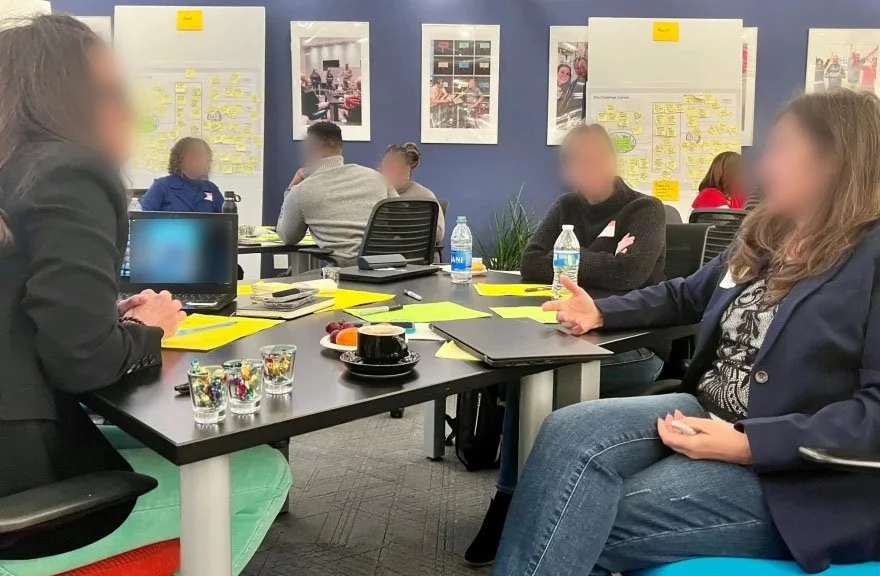
I led a group brainstorm where each attendee ideated solutions prompted by the individual need statements listed above. After sharing our ideated concepts, we brainstormed again with the goal of incorporating different aspects of three different realms: resources, opportunities, and people.
Concepts
The ideated value proposition concepts will be used to energize prospective cohort members around future possibilities, and provide an idea of the types of concepts we could pursue together. A common thread between many of the concepts was personalization, and involved the membership association learning how each member would like to grow professionally and what they’d like to get out of their membership.
One concept began with new members taking a quiz to articulate their career goals; after taking the quiz, the software would automatically generate a career journey outlining next steps and how the membership will help them meet their goals. This journey could be evolved any time they want to pivot their career or adjust their goals.
Another concept, peer group mentoring, involves a group of mentees meeting biweekly with one mentor, allowing them to learn from the problems that their peers come to the mentor with, providing them with a variety of perspectives and an environment where they can learn and grow together.
We also ideated an online platform with AI curated education based on each member's interests and goals. Bite sized video courses and articles with a social media component that allows members to discuss relevant topics and subsequently get to know others who have similar professional interests.
Business Strategy Direction
This study provided us with a directional sense of which unmet needs are most important to young professionals, and what fields have enough overlap for this cohort model to be effective. While the needs and motivations of medical young professionals were similar to those of non-medical young professionals, the competitive landscape was different enough that their unmet needs varied drastically. This insight helped us make the decision to pursue a medical professional association cohort separately from a non-medical cohort. We've already begun establishing these cohorts.